
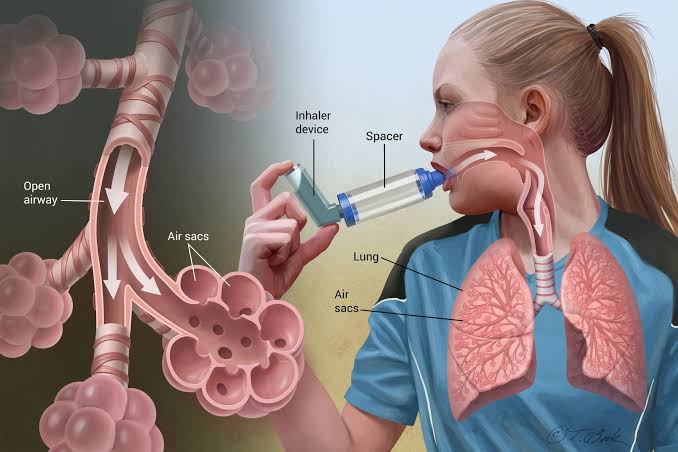
Some parents do not believe that children even toddlers can have asthma! However this is true! It is important therefore for parents to know and understand childhood asthma.
Additionally unlike most other child health issues where we as paediatricians frown on self-medication by parents, in asthma we actually encourage that! Shocked? It is true and indeed a common saying is that parents actually manage asthma in children, doctors only support!
This article and the second part will explain all you need to know about childhood asthma.
What is asthma?
Asthma is a chronic condition characterized by reversible obstruction of the airways. This is because the airway of an individual with asthma is programmed to react this way when exposed to some substances or conditions. These substances / conditions are what we call triggers.
In childhood asthma, the lungs and airways become easily inflamed when exposed to certain triggers such as inhaling airborne pollen or catching a cold or other respiratory infection.
Childhood asthma can cause bothersome daily symptoms that interfere with play, sports, school and sleep. In some children, poorly managed asthma can cause dangerous asthma attacks.
Childhood asthma is not a different disease from asthma in adults. However, children tend to face unique challenges. Asthma in children is a leading cause of emergency department visits, hospitalizations and missed school days.
Among children and adolescents aged 5-17 years, asthma accounts for a loss of 10 million school days annually and costs caretakers $726.1 million per year because of work absence. So the burden of asthma extends beyond the child to the caregivers and affects productivity.
COMMON CHILDHOOD ASTHMA SIGNS AND SYMPTOMS INCLUDE:
WHEEZING : Wheezing is a musical, high-pitched whistling sound produced by obstruction to airflow. It is one of the most common symptoms of asthma. The wheezing is usually during exhalation (expiration or breathing out).
COUGH: Usually, the cough is nonproductive and non paroxysmal; coughing may be present with wheezing.
COUGH AT NIGHT OR WITH EXERCISE :Cough at night or with exercise may be the only symptom of asthma especially in cases of exercise-induced or nocturnal asthma. Children with nocturnal asthma tend to cough after midnight or during the early hours of morning
SHOTNESS OF BREATH OR TIGHT CHEST: A history of tightness or pain in the chest may be present with or without other symptoms of asthma, especially in exercise-induced or nocturnal asthma
What causes asthma?
ENVIRONMENTAL AND GENETIC FACTORS
Asthma tends to run in families. It has a genetic component. History of asthma in the maternal family is associated with a higher risk of asthma. Asthma is also commoner in males
Environmental and genetic factors have been associated with the development of asthma. Interactions between environmental and genetic factors result in airway inflammation, which limits airflow and leads to changes in the function and structure of the airways.
TRIGGERS
In most cases of asthma in children, multiple triggers or precipitants are recognized, and the patterns of reactivity may change with age. Triggers include:
1. Viral infections such as common cold
2. Exposure to air pollutants
3. Allergies to dust mites
4. Pet dander
5. Pollen or mold
6. Physical activity
7. Changes in weather or cold air
8. Previous allergic reactions including skin reactions
9. Food allergy or hay fever (allergic rhinitis)
10. Hives or eczema
11. Living in an urban area with increased exposure to air pollution
12. Obesity
13. Emotions
Any child with the symptoms listed above needs to be evaluated by a Paediatrician. At the least do see a general practitioner.
In the second and concluding part of this article, we will look at what to do when a child has an asthma attacks and how to prevent asthma attacks.